
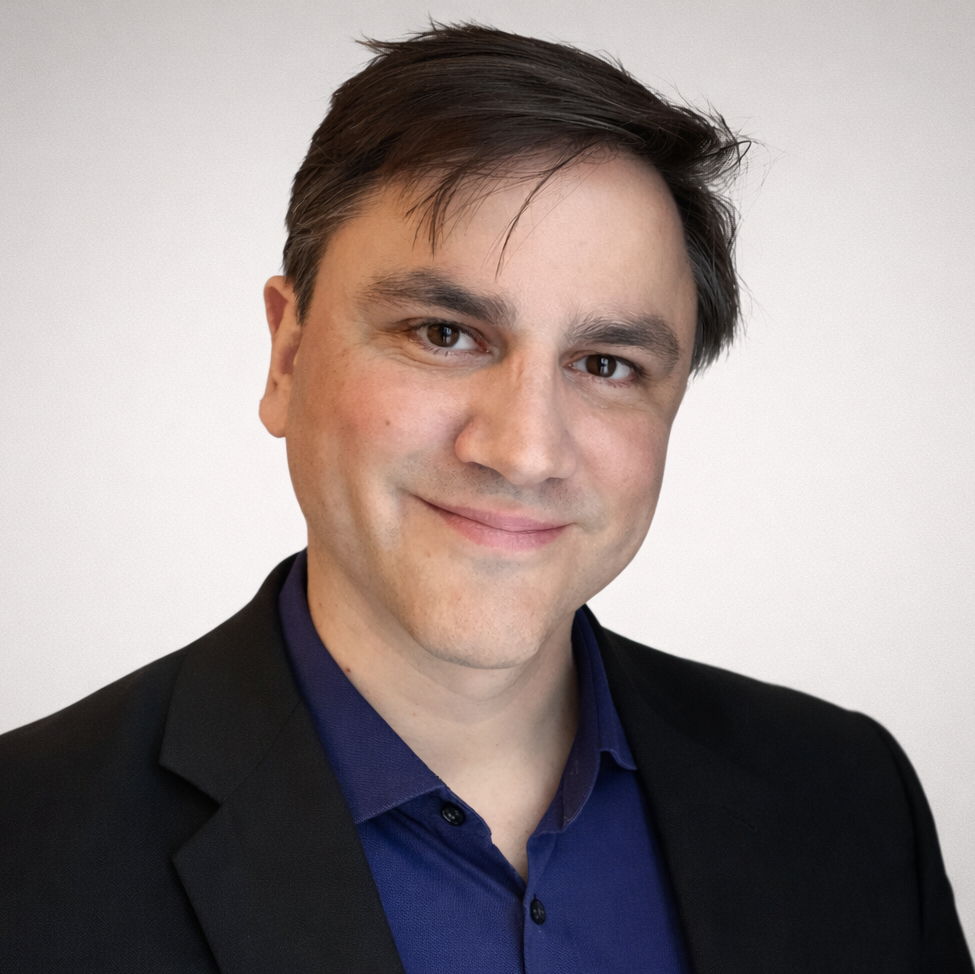
We’re excited to welcome Erik Arnold to One Degree. His lived experience, deep technical expertise, and long-standing commitment to strengthening the nonprofit sector bring a powerful combination of heart and discipline to our next chapter.
When you speak with Erik, one theme becomes clear: systems should work for the people they are meant to serve. That conviction is not abstract. It is personal.
Erik grew up as the youngest son of a single mother. His family relied on food stamps and the support of community-based organizations in their town. Those early experiences gave him a lasting appreciation for the safety net, not as policy, but as something real that families depend on. He understands what these services mean from the perspective of someone who benefited from them, and that perspective continues to shape how he thinks about technology, impact, and responsibility.
Erik entered the tech world in Seattle in the early 1990s and was, as he puts it, “lucky enough” to be part of a startup founded by Bill Gates. Over time, he became increasingly interested not only in building technology, but in improving how technology companies engage with the social sector.
In his view, traditional corporate social responsibility efforts like small donations, volunteer days, even one-off prototypes, can be well-intentioned, but often fail to “move the needle.” In some cases, they even distract nonprofit teams that lack the resources to absorb short-term initiatives. What Erik advocated for instead was lasting engagement: partnerships grounded in ethical, sustainable models that help nonprofits succeed over the long term.
That perspective led him to Microsoft in 2017, where he helped found the Tech for Social Impact team within Microsoft Philanthropies. As CTO for Microsoft Philanthropies and a General Manager of the team, Erik helped grow an initiative supporting hundreds of thousands of nonprofits worldwide. He oversaw a billion-dollar software donation portfolio, led engineering teams dedicated to the sector, and shipped products designed specifically to meet nonprofit needs.
Since early 2025, Erik has worked independently with nonprofits, foundations, and mission-driven companies to help them navigate a shifting funding landscape and use digital technology more strategically.
A formative experience earlier in his nonprofit career sharpened his systems mindset even further. During a visit to PATH’s operations in Kenya, he saw firsthand the complexity of delivering services in resource-constrained environments. In a clinic supporting mothers and children with HIV, a doctor showed him a USAID form used to order medication. A new medication was available, but it wasn’t in the dropdown menu. The doctor asked a simple question: “How do I get it in the dropdown?”
Behind that question was a deeper issue. No one on the ground knew who built the system, how it connected to headquarters, or what would happen if the form were changed. For Erik, that moment crystallized a core insight: too often, technology in the social sector becomes fragmented, built around grant cycles or reporting requirements rather than around the lived experience of the individual receiving services.
“What we should be tracking is the individual and the services they’re getting, and whether they’re getting the right services.”
When systems are designed around anything else, the result can be an ecosystem of disconnected tools that burden frontline staff instead of empowering them.
That systems-thinking approach is central to what Erik is excited to build at One Degree: moving from a collection of semi-connected solutions toward a cohesive, scalable platform, one that is performant, compliant, easier to support, and built for real-world adoption.
Erik understands how to improve estimation and planning, how to create better visibility into workstreams, and how to shift teams from reactive execution to proactive strategy. Just as importantly, he bridges business and technology fluently. With “one foot in business and one foot in tech,” he translates across program leaders, engineers, funders, and partners.
He also brings a clear perspective on nonprofit innovation. In his experience, nonprofits are not resistant to change.
“It’s not the smarts. It’s not the desire. It’s that nonprofits don’t have the resources.”
Sustainable impact requires investing in people, systems, and infrastructure, not simply minimizing overhead.
Erik’s arrival strengthens our ability to build technology that is not only innovative, but sustainable, interoperable, and built to last.
Outside of work, Erik is a lifelong tabletop gamer who started playing Dungeons & Dragons in the early 1980s and even wrote a dice-rolling program on a TRS-80. He enjoys hiking and spending time outdoors in the Pacific Northwest, and he’s an avid cook who finds joy in preparing meals for friends and family.
Welcome, Erik. We’re glad you’re here.