It has been a busy fall at One Degree. On Tuesday the team joined together with our Google.org Gen AI Accelerator colleagues for a mid-point presentation to demo progress to date. It is an extraordinary group of committed leaders grappling with the challenges of applying new technologies, to old problems.
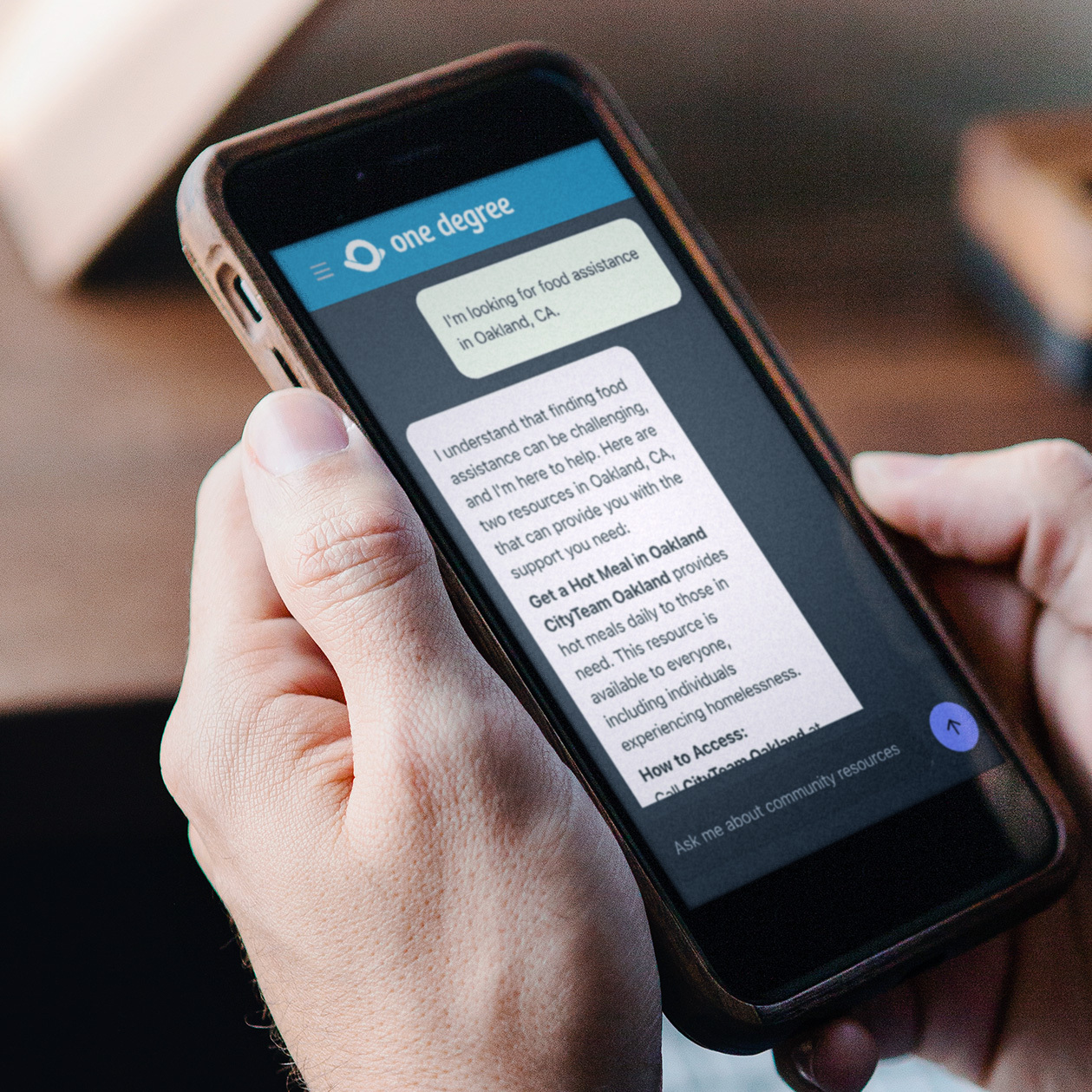
At One Degree, we have been focused on two workflows where AI can reduce friction for people seeking help and the caseworkers who support them. First, our new natural-language search prototype lets people ask for support the way they naturally speak (“food pantries in Oakland”) and receive verified, structured results pulled from One Degree’s resource database to improve connection rates.
Second, we’re kicking off AI-assisted intake: parsing organizations’ existing forms to generate secure digital versions and offering privacy-aware pre-fill so referrals arrive complete—cutting phone-tag and drop-offs.
Early user research underscored four challenges we will be working on over the next few months: speed, trust & accuracy (human-verified results), privacy by design, and clear value and differentiation familiar tools like Google Search and ChatGPT.
What’s next? The team is hardening evaluations, moving the AI search experience to production, and prototyping the intake flow so it plays nicely with today’s systems—and tomorrow’s agents—without burdening small nonprofits.
At One Degree, we are exploring the potential of AI to enhance our platform and better serve our community. To guide our efforts, we conducted a survey starting July 7th, 2025, to understand how our members (including help seekers, service providers, and health workers) feel about AI.
This survey was distributed to the One Degree Community Feedback Group, a group of active One Degree members who have volunteered to participate in various feedback activities to help improve our platform, including surveys, software testing, and interviews. The group is primarily composed of “help seekers,” those who search for community resources for their own needs, and “direct service providers,” those who connect their clients to resources. A number of participants even have experience in both categories.
The promise of generative AI is impressive, but it comes with potential risks. We are mindful of concerns about accuracy, bias, and the potential for misinformation, especially in a sector as critical as community resource navigation, which relies heavily on accurate and up-to-date information. This survey was designed to ground our work in the real-world experiences and concerns of our community, ensuring that any AI functionality we develop is done mindfully with a sense of responsibility to the people we serve.
Current Challenges in Accessing Resources
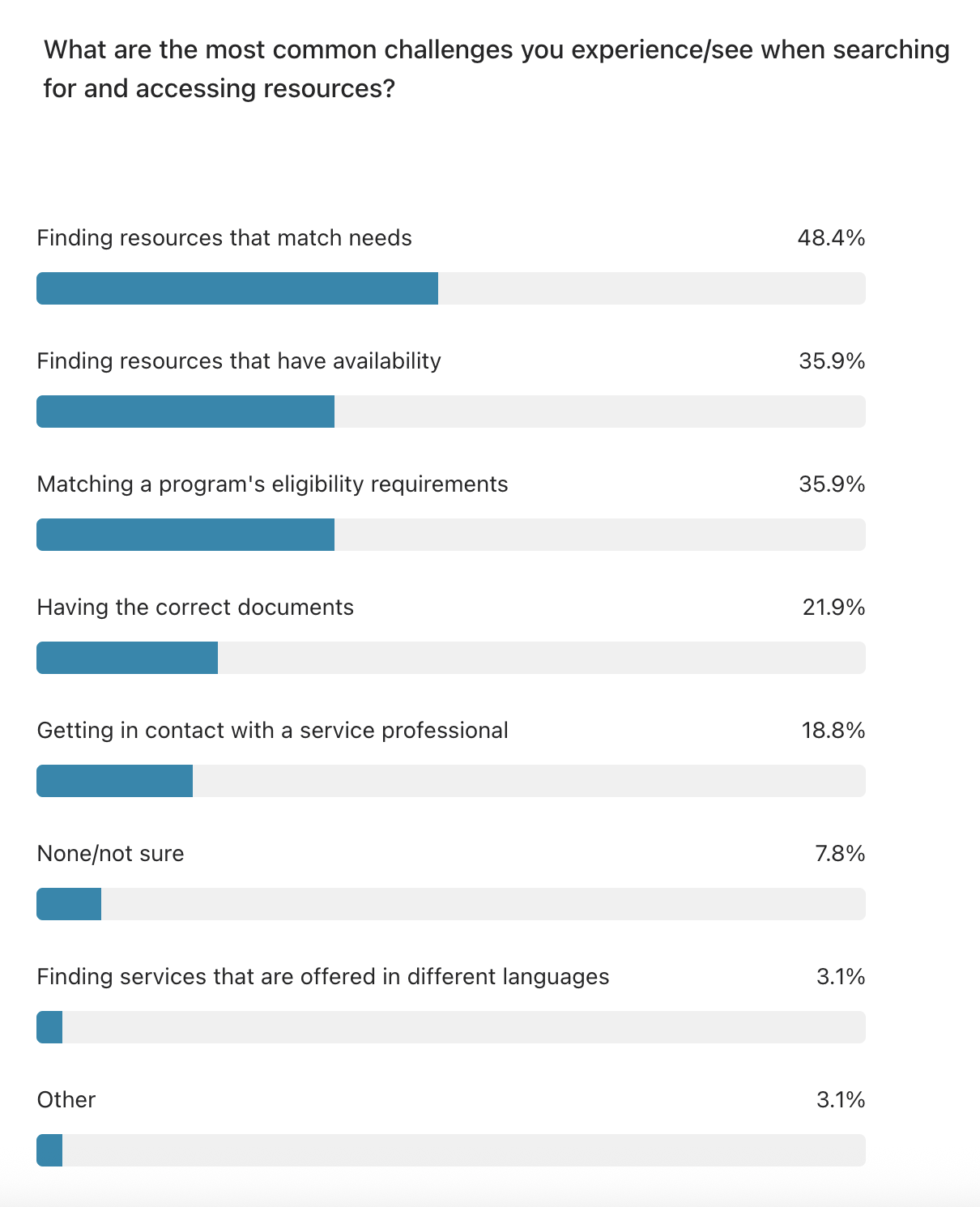
Our survey began by asking participants about the primary challenges they face when searching for and accessing resources. We received over 60 completed surveys, and the responses revealed a complex web of systemic and operational hurdles. Many participants noted the difficulty of navigating a fragmented system, where crucial information is often outdated or hard to find.
Here is a collection of responses from our participants organized by theme:
Systemic and Operational Hurdles:
“Too many disconnected systems or organizations, which can make it hard to find.”
“Frequent changes in program availability or requirements.”
“Limited coordination between service providers.”
“Finding one that is actually able to help me/ finding one that hasn’t hit its limit of clients.”
Information and Navigation:
“Services are often not in area needed or not updated frequently enough.”
“Not knowing where to start or who to ask for help.”
Human and Process Gaps:
“A lack of follow-up or case management, where people are given information.”
“Limited coordination between service providers.”
These responses highlight a clear need for tools that can simplify navigation and provide up-to-date, accurate information. They address the core friction points that prevent people from getting the help they need. Due to these challenges, we are carefully assessing how generative AI can help support seekers and professionals in a complicated, fragmented system. These problems have been persisting for 10+ years, and our team is optimistic about the potential for generative AI-powered technology to create real shifts and impact in the sector.
AI Perceptions and Applications
When asked to define AI in their own words, participants provided a range of perspectives, from seeing it as a helpful tool to viewing it with skepticism. Responses included:
“It’s an alternative to a human customer service representative. AI provides information gathered from the web.”
“helped by a streamlined, computer powered artificial personality that after answering a few questions can adapt and understand your individual needs and goals.”
“Uses too much energy and is detrimental to the earth. If you say you care about connecting people to resources we cannot use AI as a go to.”
“at my company we are not allowed to use A.I in any form”
The last quote, in particular, suggests that institutional policies around AI are already beginning to take shape.
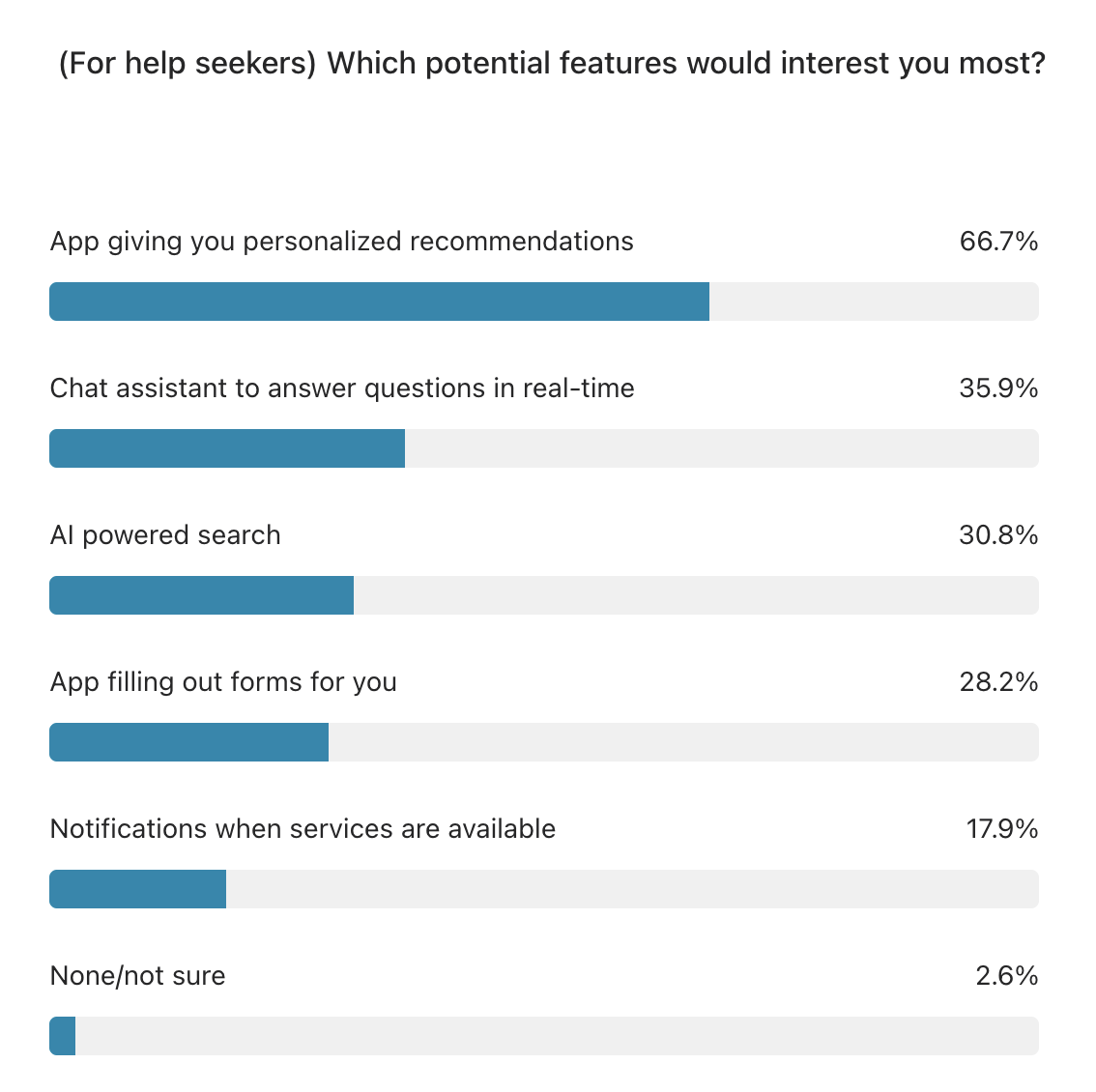
We then asked participants about potential AI features they would find most useful.
For the 39 participants who identified as help seekers, the top-selected features were:
App giving you personalized recommendations (26 votes)
Chat assistant to answer questions in real-time (14 votes)
AI-powered search (12 votes)
This data suggests a strong desire for personalized guidance, which could be particularly impactful for those navigating a complicated social services system with little prior knowledge.
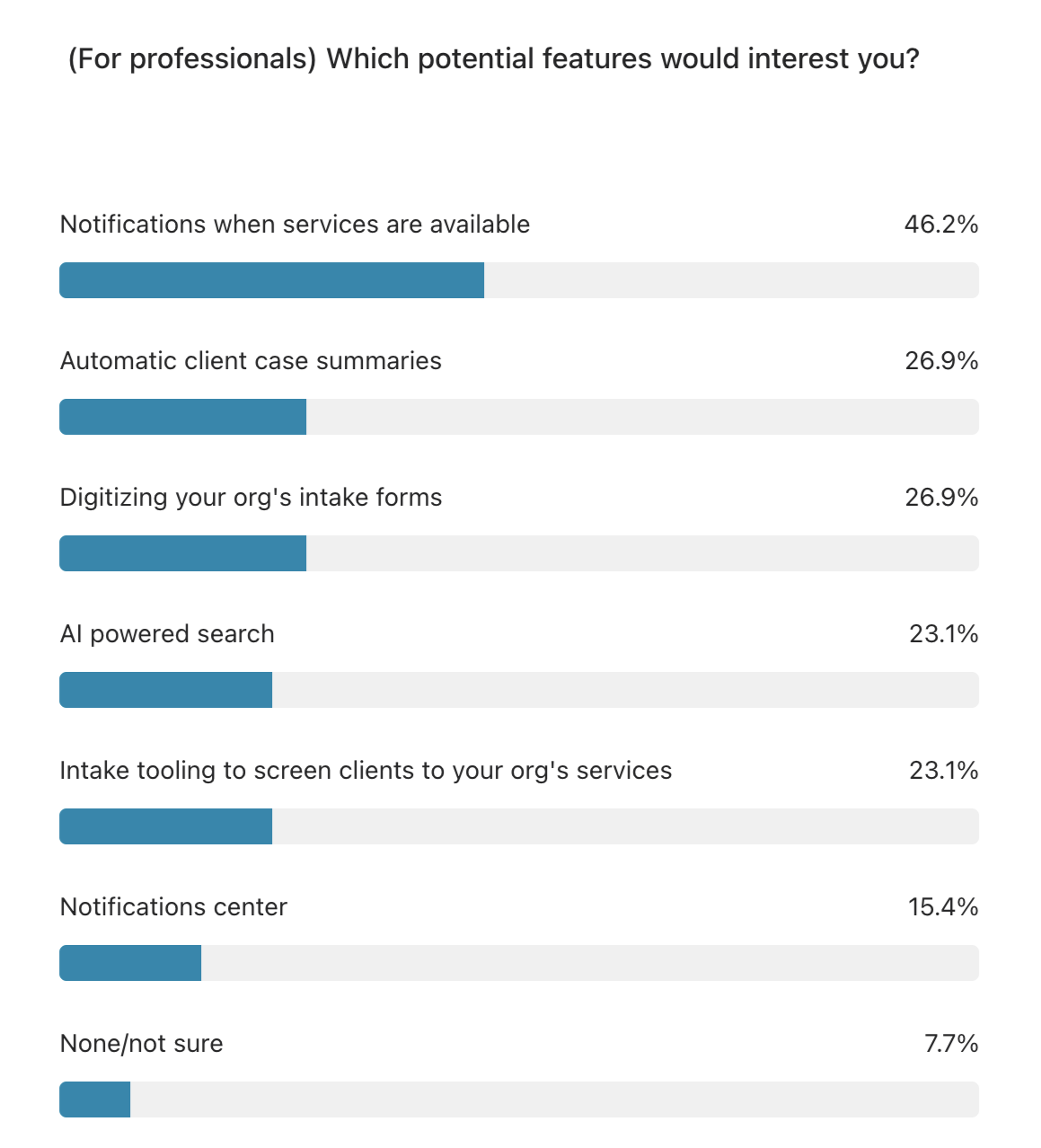
For the 26 professional service providers, the highest-rated features were:
Notifications when services are available (12 votes)
Automatic client case summaries (7 votes)
Digitizing your organization’s intake forms (7 votes)
These results point to AI’s potential to streamline administrative tasks, freeing up valuable time for service providers to focus on client interaction and support.
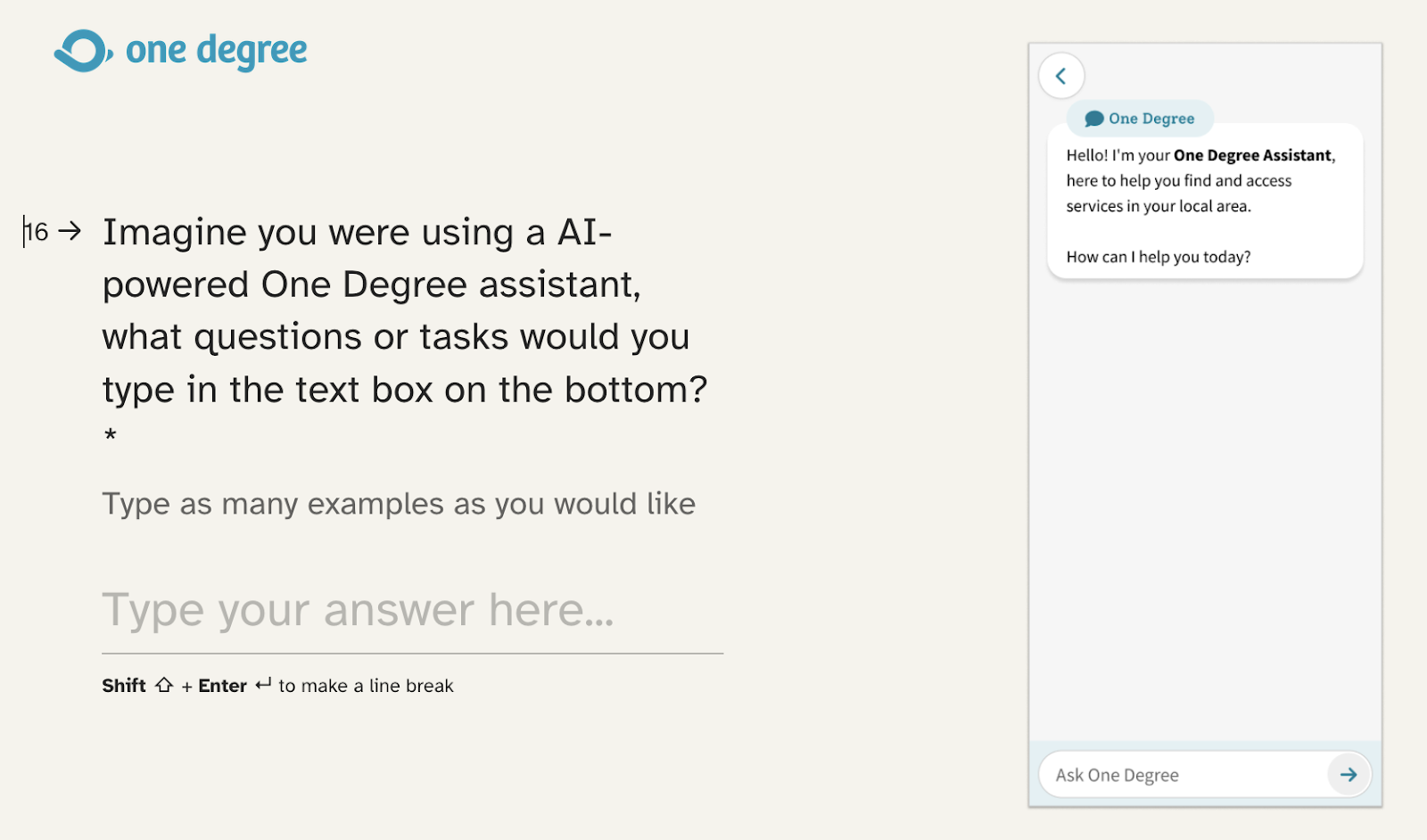
To further understand how people might use an AI assistant, we presented a mockup and asked what questions they would ask. Responses were varied but often centered on specific, time-sensitive needs:
“Where can I find shelter tonight in my area?”
“Show me what services are available for seniors over the age of 55 within the 91331 zip code?”
“Help with sorting out medicare options.”
“When was the last time eligibility requirements/provider information was updated.”
The final response is particularly insightful, as it highlights a critical concern about AI’s ability to provide timely and accurate information. This is a challenge that is paramount in the social services sector, regardless of technology.
Concerns about AI
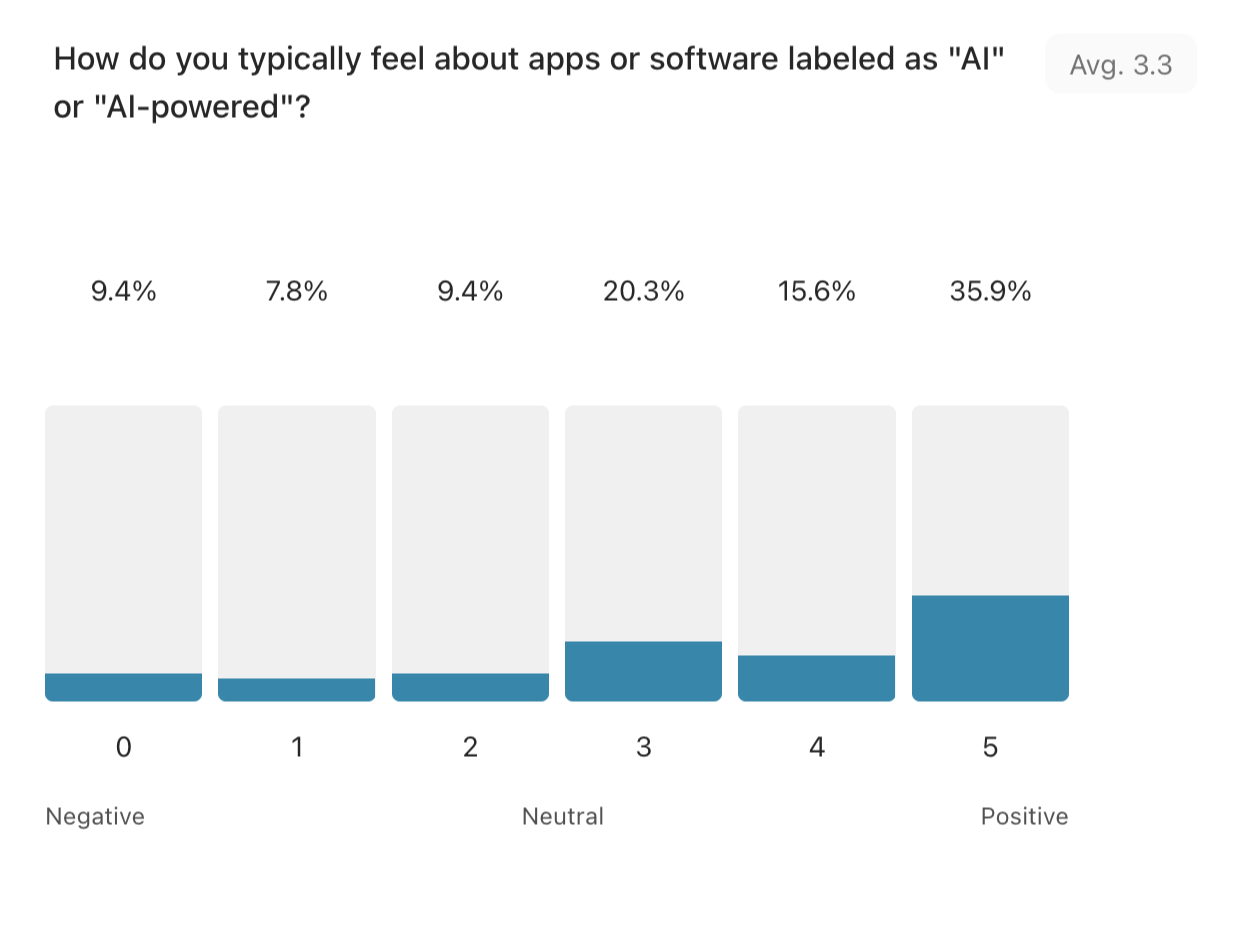
We asked participants to rate their general feelings about “AI-powered” apps on a scale of 0 to 5. The average rating was 3.39, indicating a mixture of optimism and caution. While a significant number of people rated AI highly, a notable portion of the community expressed hesitation.
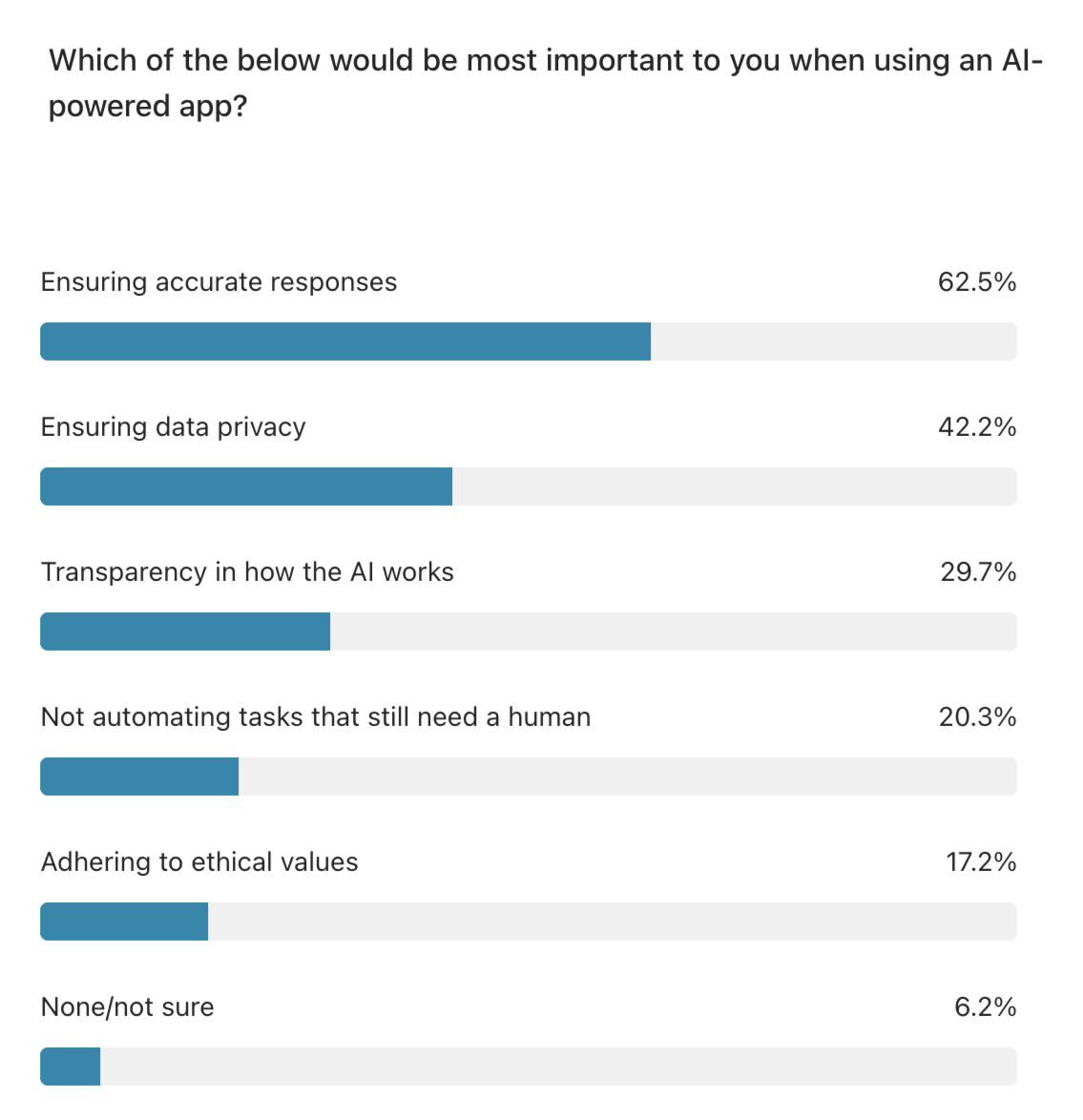
To dig deeper, we asked about their specific concerns regarding AI in resource search and referrals. The responses made it clear that trust, accuracy, and ethics are top of mind. The most frequently cited concerns were:
Ensuring accurate responses (40 votes)
Ensuring data privacy (27 votes)
Transparency in how the AI works (19 votes)
Not automating tasks that still need a human (13 votes)
Adhering to ethical values (11 votes)
To get a better sense of the specific concerns survey respondents had, here are a few notable quotes:
“One concern I have about AI being used in resource search and referrals is the risk of providing outdated or inaccurate information.”
“AI may struggle to handle unique or urgent situations with the sensitivity and flexibility that a human advisor could provide.”
“AI might unintentionally reinforce biases in the data it’s trained on.”
“Environmental impacts; it directly affects communities of color all over the world.”
“people may become too reliant on AI and miss out on the human support and empathy that caseworkers or community advocates can provide.”
This feedback highlights a critical point: the concerns extend beyond just accuracy. Participants also expressed apprehension about AI’s ability to provide the human connection essential for trust and understanding, especially when dealing with diverse and complex individual circumstances. Using AI as a wholesale replacement for people could raise significant red flags in a sector that relies so heavily on empathy and personal relationships.
Including AI in Your Work
Based on our survey findings, here are three key takeaways for any organization developing AI tools for the social sector or for communities with low incomes:
1. Tailor AI to Your Specific Users
Our survey revealed that help seekers and professionals have overlapping and different needs. An effective AI tool must be designed to serve these distinct use cases.
For help seekers, AI can offer personalized guidance to navigate the complex web of social services. They are looking for tools that simplify the search for eligible services and streamline intake processes .
For professionals, AI can be a powerful tool to improve administrative efficiency. Features like automatic case summaries or digitized intake forms can free up valuable time, allowing them to focus more on direct client interaction and support.
2. Prioritize Trust and Human Connection
Trust is fundamental in this work, and our survey respondents made it clear that trust in AI-powered platforms is not a given. Respondents emphasized the need for accurate information, especially during urgent situations. Unreliable AI responses can quickly lead to distrust.
In addition, many expressed concern that AI lacks the nuance and sensitivity a human can provide. AI should not sideline the essential role of human connection and empathy. However, when used intentionally, AI can handle routine tasks, which can free people to focus on building relationships and providing deeper support.
3. Ground AI in Real-World Systemic Challenges
AI should not be a surface-level tech solution; it must address the deep-rooted, systemic issues our community faces. Survey participants consistently pointed to a fragmented and disconnected system as a primary obstacle. Examples of major challenges include finding resources that match their specific needs, have current availability, and for which they meet the eligibility requirements. Therefore, AI development must be aimed at solving these underlying problems to be truly effective, rather than simply adding a new layer of technology.
Staying Connected
Thank you to everyone who completed our survey. We do this work to support you and our community. It is necessary to build with you to earn our place as a trusted partner.
If you’re interested in collaborating with us or learning more about One Degree:
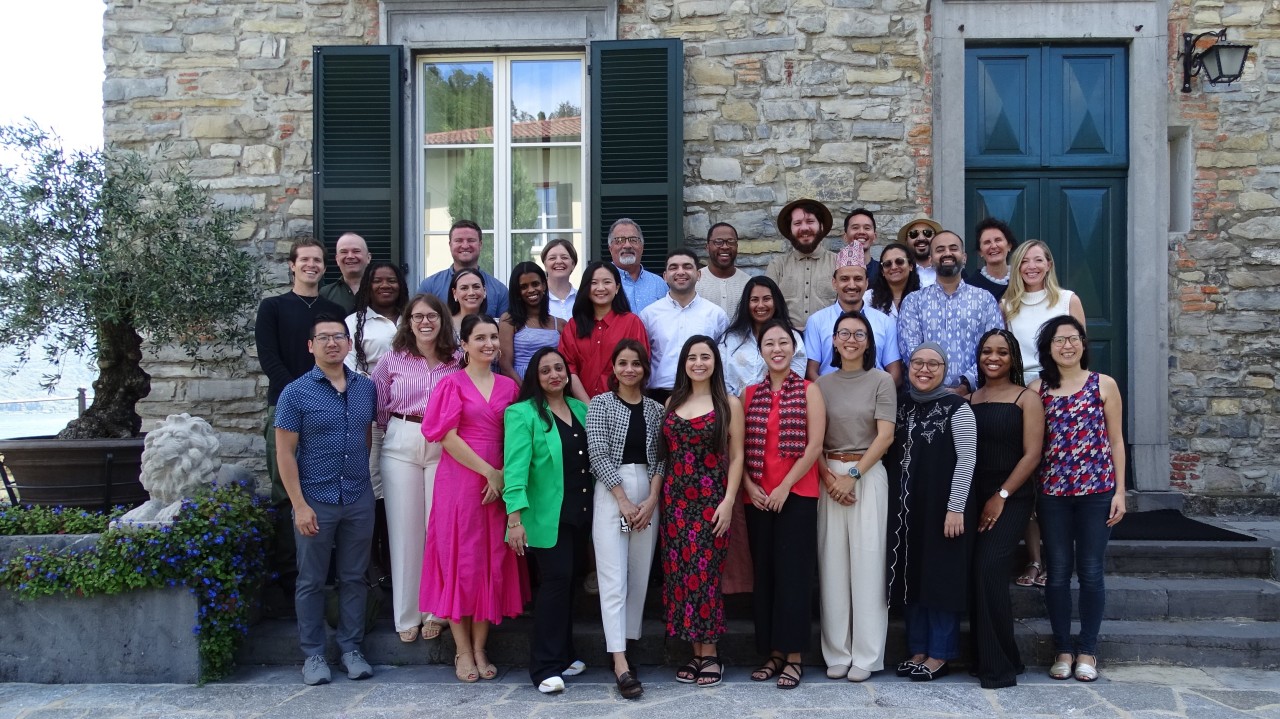
It’s hard to describe the kind of quiet you find at The Rockefeller Foundation‘s Bellagio Center in Lake Como, Italy. It’s not silence exactly. It’s more like a stillness. The hum of cicadas, the shimmer of Lake Como in the morning light, the rhythm of footsteps on stone paths. It’s the kind of quiet that lets big questions rise to the surface.
For a week this summer, I joined a group of extraordinary leaders at the Bellagio Center as part of the Rockefeller Big Bets Fellowship. The Bellagio Center has hosted Nobel laureates, heads of state, and social innovators from around the globe, and you can feel that legacy in every hallway and room. We moved through the week with a mix of reverence for those who came before us and resolve to tackle our own intractable challenges.
The Fellowship helps leaders refine their big bets, which are bold, systems-level ideas with the potential to drive transformative change. At One Degree our big bet is to build locally led, interoperable digital infrastructure that seamlessly connects people to social services and benefits, and to supercharge it with next-generation AI to leapfrog outdated systems.
Bellagio gave me the space to stress-test our big bet, see our work in a larger context, and expand my own sense of what’s possible. Here are the ideas and moments from Bellagio that changed how I see our work:
The Sky Just Got Higher
In our first Fellowship gathering in D.C., I sketched what I believed was my “sky scenario,” or the place where I dare to dream without limits. In my original future scenario, everyone has an AI assistant, and beneath it lies a robust public digital infrastructure for the social service ecosystem powered by One Degree. Social service AI agents will be able to talk to one another, instantly access accurate information, determine eligibility, handle enrollment and renewals, and guide people toward lasting economic opportunity. It’s a world where anyone who needs help can easily find, understand, and access the services and benefits they deserve, powered by AI, open infrastructure, and true interoperability.
Ambitious, right?
But at Bellagio, I had a realization: that wasn’t actually the sky. It was just our stretch goal. Our true “sky” is even higher: Universal Basic Services, where everyone’s basic needs are met and government works in deep partnership with local community-based organizations to make it happen. In that future, One Degree isn’t just building tools; we’re influencing policy through technology and data, and ensuring that in an AI-driven world, human dignity remains at the center.
Their work focuses on communities gutted by the collapse of the coal industry, towns where job losses rippled through every part of life. As they spoke, I heard echoes of something closer to home: the wave of layoffs hitting the tech industry, including my cousin and my brother (both software developers). AI is beginning to reshape the tech labor market the way automation and policy shifts reshaped the coal labor market.
It was a jarring parallel. Economic transitions don’t just “happen.” They can crush people and communities, or they can be managed with foresight and care. Appalachia’s strategies for resilience could hold lessons Silicon Valley urgently needs. That’s what struck me most: in California, we’re so accustomed to exporting our knowledge, goods, and services to the world, yet we rarely pause to consider how the wisdom of other communities could guide us.
This kind of cross-sector, cross-region learning is exactly what the Fellowship is designed to spark, and it’s helping me think about how our big bets must anticipate, and help manage, massive economic transitions.
Frustration in the Ecosystem Map
One Degree’s ecosystem map
We also did an exercise where we mapped the ecosystem around our work, and where the money, information, and power flow. I’ve done this exercise before, and the map looked painfully familiar. At the center are community members, surrounded by local governments, CBOs, and healthcare systems, each administering social services and benefits in their own silos. Around them sit One Degree, I&R hotlines, 211s, tech partners, and corporations that have moved into the space, also working in silos.
More than a decade in, the same gaps, silos, and slow-moving players remain. The social services sector often settles for incremental change because of funding limits, resource constraints, political challenges, gatekeeping, or simply because it feels safer. But incrementalism can’t meet the urgency of the need.
At that moment I realized: One Degree’s role has always been—and must continue to be—the disruptor… and to push the ecosystem forward when it would rather stand still. And our big bet is the tool to make that push both possible and sustainable.
Futuring, Not Forecasting
Some Megatrends cards
On another day, we pulled out Megatrend cards, which are futuristic prompts that describe large-scale forces already shaping the world, from technological shifts to demographic changes. They’re designed to spark imagination, helping you think beyond the immediate moment and consider how these trends might play out over decades. I loved reading through them. Too often, conversations about the future lean toward fear and loss, but these cards made space for optimism too. Among the trends we explored: AI woven into every aspect of life, growing mismatches between available jobs and workers’ skills, and the rapid urbanization of our planet.
From there, we envisioned our “preferred future” and worked backward, asking: What would need to be true in the next 5, 10, or 20 years to make this real? It reaffirmed something I believe deeply: the future isn’t something we simply adapt to. It’s something we shape. At One Degree, that means investing in AI development and design now, so that we’re not caught unprepared, but instead leading the creation of the future we want.
Economic Opportunity / Mobility / Inequality
Of course, since the Big Bets Fellowship is all about economic opportunity, we spent a lot of time unpacking what that really means. Too often, people use economic mobility, economic opportunity, and economic inequality interchangeably. But they’re not quite the same, and it’s not just about mobility—it’s about tackling inequality at its roots. And that requires shifting policy, particularly at the state level, where decisions on taxation, benefits, and resource allocation can directly shape people’s economic realities.
One example that stood out was New Mexico’s investment in its social safety net programs like childcare, healthcare, and income supports targeted to low- and middle-income families. By dedicating a greater share of tax revenue to these services, the state has seen measurable reductions in poverty rates in recent years.
That’s the power of policy aligned with people’s real lives. And it’s why hyperlocal work (like ours) must connect to long-term policy change. We can’t limit ourselves to day-to-day tasks and tactics; we need to think about how our big bet plugs into the bigger levers that can transform entire systems.
The Urgency of the Work Ahead
I left Bellagio feeling really optimistic about our future, especially being surrounded by the energy of other bold, committed social changemakers. I also left with more than just better and bigger ideas. I left with some more work to do: to sharpen One Degree’s big bet (in prep for the Rockefeller Foundation’s fall amplification event), bring more partners into these big bets, and show that bold, systemic change is not only necessary—it’s possible.
That stillness at Lake Como gave me the space to dream bigger. Back in the noise and urgency of daily life, that stillness has turned into resolve. The future won’t wait. Neither can we.
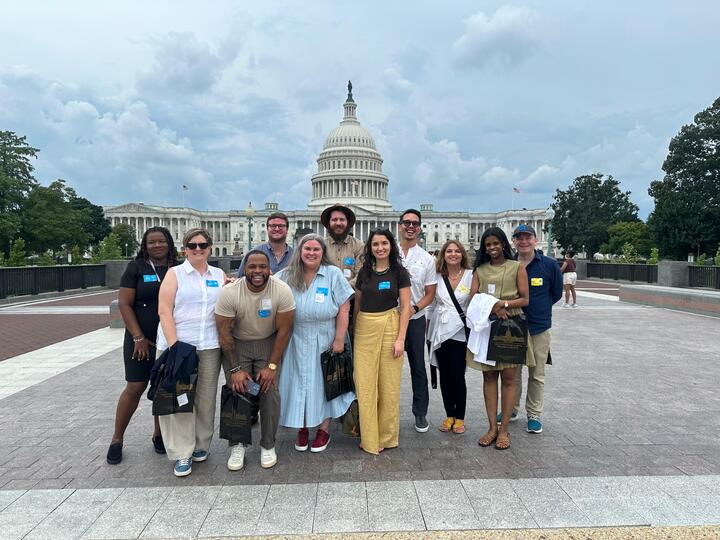
A few weeks ago, I was in DC with an inspiring group of leaders for a gathering of the Rockefeller Foundation’s U.S. Big Bets Fellowship. This four-month leadership program brings together changemakers across the country who are working to solve some of the world’s toughest challenges and who are ready to take their next bold leap.
This opportunity couldn’t have come at a better time. At One Degree, we’ve spent over a decade building technology that helps low-income families access life-changing resources, from food and housing to healthcare and legal support. What began as a radical vision to build a human-centered, tech-enabled safety net has evolved into critical infrastructure serving hundreds of thousands of people. But we’re now at a moment of transition, not just as an organization, but as a sector.
Demand for social services is rising. The systems people rely on are still deeply fractured. And while innovation is accelerating, it’s not always aligned with the realities and needs of communities. These are the kinds of challenges the Fellowship is designed to address. Not with small, incremental improvements, but with transformational thinking and bold action.
What is a Big Bet?
The Rockefeller Foundation defines a Big Bet as an ambitious commitment to tackle systemic problems at scale, whether that’s poverty or inequality. The Fellowship brings together leaders who are at inflection points in their work and are ready to reimagine what’s possible and make meaningful, lasting change.
Over the next four months, I will be part of a cohort of social impact leaders from across nonprofits, philanthropy, organizing, health, and more that are all navigating the space between where we’ve been and what’s next. The Fellowship gives us room to reflect, clarify our vision, and grow into the kind of leadership this moment demands.
How We’re Putting Big Bets into Action.
For us, this isn’t just a leadership development opportunity. It’s a strategic launchpad that is giving us space to sharpen our focus. We know the I&R (Information & Referral) ecosystem is fractured. We’ve seen firsthand how difficult it is for families to find help when they need it most. We’ve also seen how for-profit SDoH tech solutions have fallen short because they fail to center trust, collaboration, and lived experience.
So we’re asking: What’s the big bet that can truly transform how people access support?
Well, we’ve got a couple of big bets on our minds. First, we want to demonstrate that nonprofits can power regional, interoperable infrastructure for coordinated access to social services. We want to shift the frame from platform competition to ecosystem collaboration. Second, we’re building next-generation AI tools to leapfrog outdated systems and transform how people find and access support at scale. Our bet is that governments, nonprofits, healthcare providers, and tech platforms will all need trusted, underlying infrastructure to operate in an AI-powered (and agent-powered) world. This Fellowship gives us the space to test, refine, and position these ideas for transformational investment.
What’s Next?
These Big Bets aren’t abstract. They’re already in motion. And we’re using this Fellowship to double down: to clarify our vision, test our hypotheses, and unlock the kinds of transformational partnerships and investments that this moment demands.
We’re deeply grateful to the Rockefeller Foundation for believing in the potential of bold ideas and investing in the leaders who are bringing them to life.
If you’re also thinking about what your “big bet” might be, I’d love to connect. We’re all being called to lead differently, and we don’t have to do it alone.
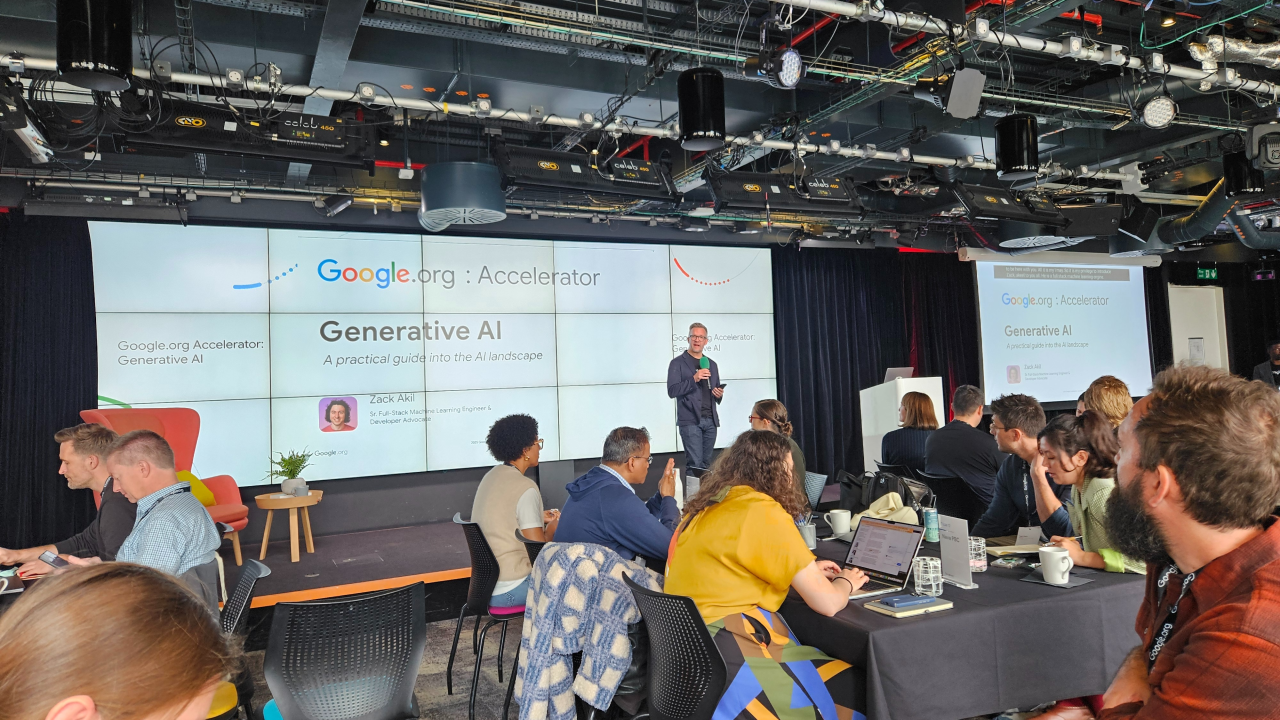
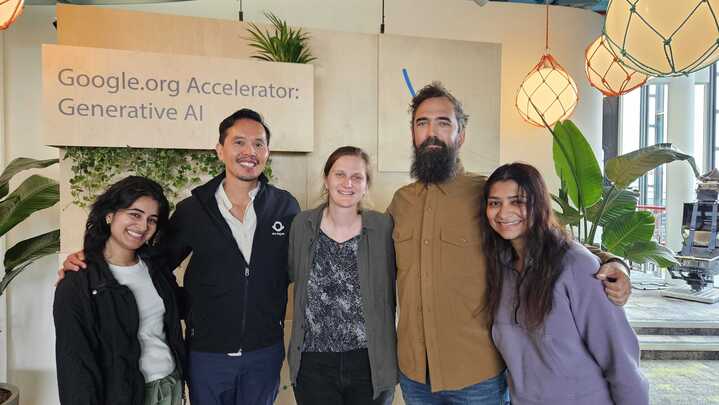
Last week, I joined 19 other visionary teams in London for the Google.org Gen AI Accelerator. Immersed in the heart of Google and surrounded by brilliant minds from DeepMind (Google’s AI research lab) and across the Googlesphere, it felt like stepping into the future. The energy was electric, and the pace of learning was like drinking from a firehose.
This experience has fundamentally shifted my perspective on AI and our overall work at One Degree | 1degree.org. Initially, I thought we’d make incremental improvements to our existing chatbot prototype, but now I see a much bigger opportunity. After a week of learning, testing, and dreaming, we realized: we have the chance to do something much more ambitious.
We’re not just building an incrementally better tool; I see the opportunity to position One Degree to be at the forefront of how AI can transform access to social services. Since our founding 13 years ago, One Degree has always been about using the most innovative, cutting edge technology to make an impact in communities, and today, AI represents the next frontier in that mission.
But here’s the reality: AI won’t fix the root causes of bureaucracy and inequity in our social safety net that prevent people from getting the help they need. Those are policy problems, not tech glitches. The systems we’re trying to improve were never designed for ease, dignity, or equity. AI won’t magically make them just.
And yet, I believe AI can help show us what’s possible. If done right, AI can help untangle some of the structural complexities — coordination, interoperability, delivery — that have long been too costly or labor-intensive for governments or private companies. But it must be grounded in community needs, equity, and deep humility.
That’s the path we’re on. The prototype we’re building won’t solve everything. But it will be a leap… a visible, working example of what’s possible when we aim not just to automate, but to transform.
Here are some of the most thought-provoking lessons I’m still processing:
Gen AI = Green Banana.
Zack Akil, a machine learning engineer at DeepMind, described Gen AI as a green banana: it’s not fully ripe, but it will be soon. Models are improving at an astonishing pace. If a model doesn’t work exactly how you want today, it might just need a few more weeks. This calls for patience and iteration.
The product development lifecycle is being reimagined.
One of the most striking shifts is how Gen AI is changing the product development process. Instead of building full end-to-end systems, teams are now slicing development into smaller, more modular experiments: testing prompts, swapping models, integrating APIs, and layering in user feedback, often in parallel. This enables faster iteration and learning cycles. It’s less about writing all the code from scratch, and more about configuring tools, running rapid tests, and stitching together components that already exist. The speed and flexibility are game-changing, but they also require a product discipline with even more emphasis on evaluation and testing.
Agent-based systems are coming
AI agents (autonomous tools that can complete tasks or even communicate with other agents) are on the horizon. These agents could one day help navigate complex systems like healthcare or housing. Imagine an AI that not only helps someone find the right benefit program, but also coordinates between multiple service providers on their behalf. We’re not quite there yet, but it’s a glimpse of what might come. And it’s pushing us to ask: what infrastructure does the social sector need to build now to ensure we’re ready to harness this power?
Responsible AI is still a moving target.
We spent time learning frameworks for building AI responsibly, like weighing harm/benefit tradeoffs, establishing thresholds for acceptable and unacceptable behavior, and examining vulnerabilities (especially for historically excluded groups). And yet, there are still so many unknowns. Even common questions, like how models handle personal identifiable information (PII) or protected health information (PHI), how much hallucination is acceptable, or when to disclose AI involvement, don’t have consistent answers. The ethical terrain is evolving, and we’ll need to build our compass as we go. We’re starting with a strong framework, but we know this journey will require ongoing reflection, transparency, and adaptation.
If a human can do it, AI eventually will…?
One of the most mind-expanding provocations we heard was that any cognitive task a human can do today, a gen AI model will likely be able to do in the future (if not now). This got my wheels turning: What rote, repetitive, manual tasks are we doing, and how might we use AI to help us reclaim that time and energy for deeper impact?
We learned so much about the potential and challenges of generative AI. And our whole team is excited to leverage this technology to create meaningful impact. We came away not just with ideas, but with a prototype in motion, a community of peers, and massive energy. Stay tuned, because this is just the beginning of an incredible journey!
I want to send a HUGE thank you to all the incredible Googlers who made the Google.org Gen AI Accelerator an inspiring launchpad and transformative learning experience for our team at One Degree. We’re coming away energized, with new tools, bold ideas, and a clearer path for how we can use AI to expand access to life-changing services.
Last week, Google.org announced that One Degree had been selected—out of a global pool of 3,000 applicants—to join a cohort of social sector organizations working to harness the power of AI to serve their communities and advance their missions.
Over the next two years, we will be reimagining the possibilities of the One Degree platform—using generative AI to cut through paperwork, strengthen collaboration, and improve access to critical social services and benefits.
America’s Social Safety Net Is Broken
Currently, millions of families struggle to access services that could transform their lives. Today’s social safety net has become a patchwork of nonprofits and government providers doing their best to operate without the digital tools needed to communicate, coordinate, and collaborate effectively in a changing world. Without these solutions, families are left to navigate an increasingly unhelpful system filled with unreliable data, incompatible systems, inaccessible waitlists, impenetrable eligibility requirements, offline enrollment forms, and even illegal scams.
An Opportunity for Change
One Degree sees this as an extraordinary opportunity to drive meaningful change. Being part of the Accelerator will give us the resources and support needed to explore new and better ways to deliver benefits and services. We believe that generative AI will be an essential tool for scaling personalized support in social services, reducing administrative burden, and improving accessibility.
“We believe that generative AI will be an essential tool for scaling personalized support in social services, reducing administrative burden, and improving accessibility.”
Traditional rule-based systems can’t handle complex eligibility rules, multilingual support, or unstructured data such as PDFs and case notes. AI can access siloed data sources, pre-fill applications, summarize case files, and generate personalized care plans. With AI-enhanced workflows and predictive recommendations, we can help prevent more families from falling through the gaps in the safety net by connecting them to the right resources before they reach a crisis point.
Leveraging the Power of Philanthropy
Thanks to philanthropy, we will now have the opportunity to pursue that vision.
We are deeply grateful to Google.org for investing in this work and excited to help build a stronger, more connected social safety net for our communities.
Stay tuned for updates as we move this initiative forward—together.
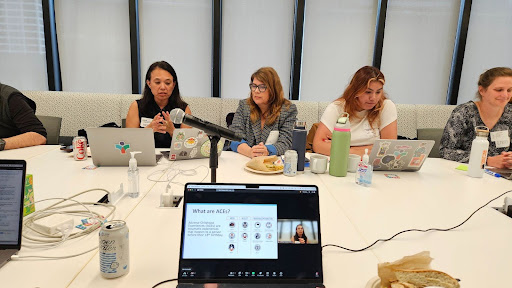
On May 12th, One Degree hosted a Social Services Lunch & Learn at the Irvine Foundation in Los Angeles. The convening spotlighted emerging models of cross-sector collaboration aimed at improving social service coordination in Los Angeles County. With presentations from leading clinical and community partners, the event highlighted practical tools and partnerships that address the social drivers of health (SDoH), adverse childhood experiences (ACEs), and benefit access for underserved populations.
1. Medical-Financial Partnership: Benefits Explorer Tool
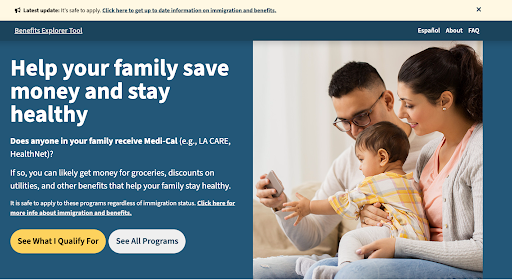
The Benefits Explorer Tool (BET)—co-developed by One Degree and the Medical-Financial Partnership, led by Co-Directors Monique Holguin and Dr. Adam Schickedanz—tackles the persistent under-enrollment in anti-poverty programs among Medi-Cal families. This mobile-friendly, login-free screener connects families to essential programs like CalFresh, WIC, and Lifeline.
With bilingual access and privacy protections for immigrant families, BET has been successfully deployed at three LA County Department of Health Services (DHS) clinics, resulting in over 1,100 benefit applications and an 84% user satisfaction rate. New 2024 updates include integration with Metro LIFE transit benefits and CalKIDS education savings accounts. BET exemplifies low-barrier, high-impact digital public infrastructure.
2. ACEs LA and One Degree: Trauma-Informed Care & Digital Referral Management
Represented by Nina Thompson, Julie Ruedaflores, and Nicole Morales, ACEs LA operates within LA County’s DHS and has screened more than 60,000 patients since 2020 to identify and address childhood trauma. The presentation underscored the widespread impact of ACEs—1 in 6 adults report four or more ACEs—which are strongly correlated with chronic disease.
ACEs LA uses a three-tiered response strategy that connects patients to both clinical and community resources, the latter powered by One Degree’s enterprise referral platform. Through the ACEs Network of Care (NoC), over 700 DHS staff have been trained to make trackable, closed-loop referrals to a vetted network of 60+ community-based organizations (CBOs). These CBOs provide support across domains such as mental health, parenting, special education, domestic violence, and substance use recovery.
The platform enables both in-network and out-of-network referrals between clinics and CBOs, improving coordination without limiting access to available services.
3. Northeast Valley Health Corporation (NEVHC): Digital PRAPARE & SDoH Innovation
Joanna Quintanilla of NEVHC shared how their 18-clinic FQHC network screens for social drivers using the PRAPARE tool. Historically a high-touch, community health worker-led model, NEVHC is now piloting digital PRAPARE assessments via SMS, integrated with One Degree for automated referrals to relevant resources.
This streamlined workflow allows for proactive, large-scale SDoH screening directly integrated into the EHR. Current pilots include outreach for well-child exams and diabetes care coordination, with future plans to scale across both pediatric and adult populations.
Key Themes and Takeaways:
Digital Infrastructure with a Human Touch – Tools like BET and PRAPARE demonstrate how user-centered design, when paired with trusted clinical relationships, can significantly increase access to benefits and services.
Sustained Ecosystem Building – The ACEs LA and One Degree partnership shows how long-term investments in training, technology integration, and cross-sector collaboration can build a scalable, durable referral system.
Clinic–CBO Synergy – Shared data, training, and coordination between health providers and community-based organizations are essential to closing service gaps and improving outcomes for families affected by trauma and poverty.
Despite today’s turbulent political environment, the event underscored LA County’s enduring commitment to integrating social and medical care, driven by collaborative infrastructure, trusted partnerships, and public-interest technology.
👉 Interested in learning more? Click here for a full copy of all the presentations.
In partnership with the Los Angeles County Department of Public Health’s Office of Violence Prevention (OVP) and the Department of Health Services (DHS), One Degree is enhancing its digital referral platform to support a Youth Suicide Prevention Program (YSPP). This urgent and innovative collaboration is designed to better connect youth and families to the suicide-related mental health and social services they need to recover from crisis.
Working Together to Improve Care Coordination
Each week, emergency departments across LA County see approximately 250 youth suicide-related visits. These are not just numbers—they represent children, teens, and families navigating deep pain and uncertainty. While immediate clinical care is essential, so is follow-up support: access to therapy, mental health counseling, social services and family care.
That’s where this collaboration comes in.
Rather than build a new suicide-related referral platform from scratch — as often happens — the County is leveraging a platform already in use at DHS. Since 2021, One Degree’s enterprise referral system has been in active use by DHS as the social service referral system of record for the ACEs-LA Network of Care. This means that the people and relationships that have made the ACEs-LA initiative so successful, will be in a position to strengthen and support this program at key DHS facilities including; Los Angeles General Medical Center, Harbor-UCLA, and Olive View Medical Center. By extending this trusted solution to support the YSPP, the initiative can move faster and go further, reaching more kids and families in need.
What This Partnership Makes Possible
The newly enhanced platform will provide emergency department staff with a digital referral solution to connect youth and families in crisis to services that support healing and stability. Through this partnership, we will:
Improve access to care by streamlining referrals to mental health and wraparound services
Enable real-time coordination between health and social service providers
Ensure accountability with better referral management and follow-up tracking
Support staff workflows with a user-friendly system designed for frontline use
This is not just a tech solution—it’s a care coordination model rooted in local relationships and trust.
A Scalable, Impact-Driven Solution
One Degree’s platform is HIPAA- and SOC 2-compliant and built with the flexibility needed to support public systems at scale. It offers:
A comprehensive resource directory tailored to LA County
Built-in communication tools for seamless coordination
Tracking and reporting capabilities to evaluate engagement and impact
A customizable interface to align with program-specific goals
By underwriting the system modifications and licensing needed for this pilot, the County is making a bold, thoughtful investment in infrastructure that can grow over time, supporting not only suicide prevention but broader youth mental health and wellness initiatives.
Building the Future of Youth Mental Health Support—Together
We believe that technology can and should be used to break down barriers to care, not add more layers of complexity. Through this collaboration, we are helping to build a more responsive, interconnected safety net that ensures no young person falls through the cracks.
We are proud to be working with the Office of Violence Prevention, the Department of Health Services, ACEs-LA, and all the frontline providers who are working every day to support youth with care and compassion. This thoughtful collaboration is a step toward a more connected human-centered social service delivery network for LA.
If you are interested in supporting this work or learning more about this collaboration, please reach out to greg@1degree.org.
The Information & Referral (I&R) ecosystem, historically a not-for-profit public service, has over the past decade attracted unexpected commercial interest from tech investors seeing an opportunity for disruption. Despite the proliferation of new technologies and platforms, commercial solutions have not delivered on their promises. This post explores the digital transformation of I&R, why commercial platforms are failing, and how AI presents new possibilities for the field.
The Evolution of the Information & Referral Ecosystem
The modern I&R field as we know it today was created by a 2000 Federal Communication Commission (FCC) ruling designating ‘211’ as a national dialing code for community information and referral services. Serving over 18.1 million requests in 2024, this not-for-profit infrastructure plays a vital role in connecting people to services like affordable housing programs, food pantries, mental health support, and job training.
211 services have historically focused primarily on information discovery. In today’s digital age, however, stakeholders—including governments, healthcare providers, and nonprofits—demand solutions that facilitate not just discovery but also service coordination and delivery.
Commercial Disruption & Unmet Expectations
The shift from information discovery to service delivery has disrupted the nonprofit I&R field and attracted dozens of commercial vendors including tech startups like Aunt Bertha (FindHelp) and Unite Us. These companies have been aggregating I&R data into private databases and developing ‘closed-loop’ referral platforms that promised to improve the coordination and delivery of social services.
Despite significant investments and early success, as these systems have aged a number of critical failure points and false assumptions have been exposed.
Overestimated CBO Engagement – Tech companies envisioned networks where local nonprofits (CBOs) would eagerly participate in service coordination. It turns out, however, the start-ups were a lot more excited about their platforms than the CBOs they promised would use them.
Market Fragmentation – Competing I&R platforms created silos, leading to inefficiencies rather than streamlined service delivery. Instead of a unified system, regions like Los Angeles have multiple incompatible networks.
Lack of Interoperability – Unlike other modern software solutions, commercial I&R platforms often resist integration with competitors. This limits their scalability and leaves governments, healthcare, and CBOS struggling with fragmented solutions.
The Role of AI in Transforming I&R
It’s understandable to be skeptical. Over the past decade, the I&R field has seen an influx of new technologies, yet many have fallen short of their promises. With that track record, it’s fair to ask: Why introduce yet another layer of technology?
The promise of AI is not simply in adding more tools to an already fragmented system. Rather, it offers a fundamentally different approach. AI can enhance collaboration and improve service coordination in three key ways:
Smarter Information Discovery – AI-driven chatbots and search engines will replace keyword-based databases with conversational interfaces that provide more intuitive and personalized search experiences.
Automation in Data Management – AI can streamline the process of updating, verifying, and maintaining social service directories, reducing costs and improving data accuracy.
Simplified Service Access – AI-powered assistants can help individuals navigate applications for social services, auto-filling forms, verify eligibility, and ensure seamless submission to relevant agencies.
These are just the most immediate and obvious opportunities and low-hanging fruit that we at One Degree are seeing and starting to work on today. But they represent only the tip of the iceberg.
A Future of Interoperable, Public-Interest I&R Technology
AI’s most valuable role, however, may not be in creating new user experiences for help seekers but rather in giving public-interest technologists the systems integration horsepower they need to make interoperability a reality. By leveraging AI for interoperability, we can level the technological playing field and empower local social sector leaders to successfully advance the promise of cross-sector collaboration and accelerate the development of new public/private solutions. We’re working on an AI concept that can help integrate disparate systems to help government agencies, healthcare providers, and CBOs work together without being locked into proprietary commercial networks.
The core issue in I&R is not technology alone—it’s cooperation—and AI might just be the transformative tool advocates for interoperability and public-interest tech need to spark a movement to bring communities and systems together for a healthier world.
We are thrilled to announce the updated launch of theBenefits Explorer Tool (BET), a benefits eligibility screener designed to connect families with critical anti-poverty programs quickly and efficiently. This milestone is the result of a successful collaboration between One Degree and UCLA’s Medical Financial Partnership (MFP), leveraging insights from our pilot work to enhance user experience and expand access. Thanks to funding from the W.M.Keck Foundation Southern California Program, we are now positioned to scale this service to tens of thousands of families in Los Angeles, ensuring that more parents and children receive critical supports that promote health and economic stability.
Building on the Success of the Benefits Explorer Tool Pilot
Since 2018, the MFP has integrated economic supports and social services into clinical care in LA County’s Department of Health Services (DHS) — the state’s largest public healthcare system and medical home to 1-in-4 on Medicaid in LA’s medical safety net. During our pilot phase of the BET, we confirmed that families and clinicians see tremendous value in an easy-to-use benefits screening tool that complements touchpoints with MFP Social Workers. Key findings included:
84% of users reported they were highly likely to recommend the BET to other clinic families
Most users were able to access benefit enrollment applications in under three minutes
Both clinicians and patients strongly supported scaling the service model as well as individualizing users’ experiences based on the life stage of the parent and child
With these insights, we have refined the BET to improve accessibility and effectiveness for even more families.
Major Enhancements in This Initial Launch
We’ve made significant improvements to ensure that families can access benefits with greater ease and confidence through the BET, including:
Refreshed look and feel for a more user-friendly experience.
Clearer, more accessible information around public charge and public benefits access for immigrant families.
More accurate results tailored to the age of children in the household.
A shareable link so users can return to their results at any time.
These enhancements are particularly important in a time of increasing confusion, uncertainty, and threats around public benefits access for immigrants. “[Give families] the information to make an informed decision on whether they actually want to pursue the application. Being as transparent as possible is really important because [families] are already living in fear,” says an MFP Parent Leader.
A Model for Cross-Sector Collaboration
This project is a prime example of effective collaboration between healthcare and a nonprofit technology partner. The MFP team provided clinical expertise to ensure the platform meets the needs of families in LA and the clinical workflow, while One Degree leveraged its existing infrastructure and expertise in social service in LA. The MFP Parent Leaders also played a vital role in guiding the direction of this project, ensuring it reflects the lived experiences and needs of families.
“By building a user-friendly digital tool that supports families within the context of their clinic experience, we are making benefits more accessible to families who need them most,” says Rey Faustino from One Degree. “This partnership demonstrates what’s possible when we combine expertise across disciplines to serve our communities better.”
What’s Next? Expanding and Enhancing Support
We are committed to building on this progress. The next phase of our work through 2025 will focus on developing additional features to improve users’ experience with the BET:
Leveraging One Degree’s extensive community resource network to connect families to housing, legal help, and other supports they prioritize.
Designing content that reflects families’ life stages – to enable the BET to support families’ changing goals and priorities over time.
Making it easier for families to stay engaged with the BET through improved follow-up texting – so they can return to explore resources at their own pace.
With continued support and collaboration, we’re working towards a more connected safety net that better supports families’ health and economic well-being. If you share our vision, we invite you to join us in expanding access to these critical resources—we are striving to build the infrastructure that allows for this innovation. We envision a Los Angeles where cross-sector partners work together with a shared purpose: making it easier for families to get the support they need–so they can focus on building the future they want.
_________
Learn more about our innovative collaboration with the UCLA Medical Financial Partnership team here.
Over the past few months, in collaboration with Harvard University’s Technology for Social Good (T4SG) team, we have tested the potential of artificial intelligence (AI) to improve how vulnerable populations find and connect with social services and benefits.
We know that AI has tremendous potential in the commercial sector, but can it really enhance the nonprofit work we do at One Degree? This project gave us an opportunity to experiment with AI and test how it might be used to improve the way we connect people to the resources they need. In this blog post, we will walk you through the experiment, its early results, and what comes next as we evaluate its potential value for our future work.
Why Use AI? Why is it Valuable?
The people we serve often struggle to find the right services at the right time. With thousands of resources available, each with its own eligibility requirements, it’s always a challenge to match people with the right opportunities and support.
AI has the potential to simplify this process, allowing for quicker, more accurate resource matching, without the information overload that can lead to confusion and frustration. But as with any emerging technology, we must test and evaluate whether AI will truly benefit the communities we serve before fully adopting it.
At One Degree, we are committed to using technology to create a more equitable social care ecosystem, and this must be done thoughtfully. That is why this AI experiment was designed to help us test effectiveness, reliability, and trust in real-world scenarios—without jumping into broad implementation right away.
The AI Chatbot Experiment: Function-Calling Method vs. Retrieval-Augmented Generation
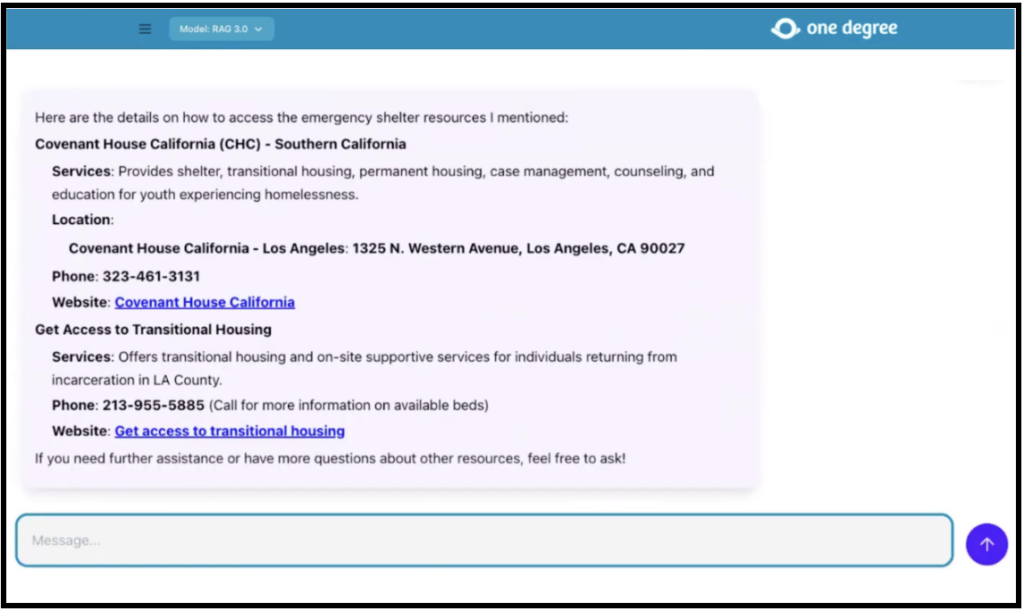
In collaboration with the team at Harvard, we built a custom AI chatbot for internal testing. The chatbot took in user queries, such as questions or requests for specific types of support, and then recommended resources based on the user’s circumstances, such as their location, eligibility criteria, and specific needs related to housing, food assistance, healthcare, employment, or legal aid.
We conducted two primary tests: one using a function-calling method, which involved taking user queries, converting them into structured database queries, and retrieving responses directly from our system. The second test utilized a retrieval-augmented generation (RAG) model, which transformed both resources and user queries into numerical vector representations. By leveraging cosine similarity, the AI was able to match user needs with the most relevant resources efficiently.
The RAG model demonstrated significantly better performance in response accuracy and speed, making it the more viable solution moving forward. While the AI showed promise in speeding up searches and improving accuracy, it also revealed challenges such as gaps in data quality and the need for clearer confidence indicators in AI-driven recommendations. Take a look at the AI Chatbot here:
What Did We Learn and What’s Next?
Key Takeaways:
AI shows promise for improving accuracy: Early testing indicates that AI can help provide more personalized and relevant resource recommendations, based on individual user needs. Factors such as location, eligibility, and specific needs are all taken into consideration.
Efficiency gains are possible, but require investment: The AI tool significantly reduced the time required for staff to find relevant resources, cutting search time down and allowing staff to focus on helping people with these resources. While AI improved search efficiency for staff, ongoing refinements are needed to ensure reliable, high-quality recommendations.
Trust and transparency are crucial: Users must feel confident in the AI’s ability to recommend accurate and relevant resources. Building trust with people seeking services will be key.
Next Steps: Finding Funders and Strategic Partners
Refining the AI tool: We will continue to refine the chatbot, improving its accuracy and usability based on internal feedback.
Testing with trusted partners: After further internal testing, we plan to beta-test the AI tool with 10-30 community-based organizations (CBOs) in Los Angeles. This will help us gauge how the tool performs with external users and gather insights on its real-world value.
Securing innovation funding: To scale and refine the AI tool, we need innovation funding from funders who believe in the power of AI for social good. Philanthropic organizations, venture philanthropy, and tech-driven funders will be critical partners in bringing this vision to life.
Building partnerships with organizations with quality databases: The success of AI-driven solutions depends on high-quality, well-structured resource data. We are actively seeking partnerships with other nonprofits and stakeholders who can contribute to and benefit from this initiative.
Evaluating integration into One Degree’s core platform: At this stage, we are still assessing whether AI is the right fit for broader integration into One Degree’s offerings, including 1degree.org. We are carefully evaluating the results of our testing before deciding how to move forward with AI as part of our service delivery.
We’re excited about the potential of AI, but we’re taking a thoughtful, measured approach to ensure that any technology we adopt genuinely benefits the communities we serve. We will continue to test, learn, and adapt as we move forward, and we’ll keep you updated on our findings. A huge thank you to the Harvard T4SG team for their time, expertise, and dedication to this project! It has been an enormously valuable learning experience to collaborate with such a talented team of technologists — special thanks to our exceptional project leads Sabrina Hu and Christopher Perez.
We’re going to continue sharing our insights as we experiment and implement AI, and we hope the lessons we have learned from this experiment can be valuable to other nonprofits and organizations interested in using AI for social care.
If you are interested in investing in AI in the social sector, let us connect to explore the possibilities.
We’re excited to introduce the newest member of One Degree’s Board of Directors, Joshua Ogundu! From working in product management to founding their startups, Joshua has always been driven to create solutions that make a difference. In this Q&A, Joshua shares a bit about his journey, what brought him to One Degree, and how his skills and experience can help us grow and better serve our communities.
Tell us a little bit about yourself and your background.
I’m originally from Michigan, but I moved to Los Angeles from Washington, D.C., about eight years ago. My career has always been centered around technology, whether it’s been in product development, product operations, product management, or founding my own tech companies—which is what I’m currently doing with Tradeway.
From an academic perspective, I’m a graduate of Michigan State University. I came to Los Angeles to attend business school at USC, which further cemented my interest in combining business strategy with technological innovation.
Why did you choose to join One Degree’s Board?
I was introduced to One Degree by Karla Monterroso, who is the board secretary. Karla and I have known each other for years, both socially and professionally, from her time leading Code 2040. When she suggested I might be a good fit for the board, I had conversations with her and later met with Rey. It felt like a great alignment because I believe focusing on reimagining the social safety net is super important.
This mission also ties into the work we’re doing at Tradeway, where we aim to connect individuals with opportunities in skilled trades such as electrical work, HVAC, plumbing, solar panel installation, and wind turbine maintenance. Both efforts—increasing economic opportunities and rethinking how we provide essential resources to underserved communities—share significant common ground. That synergy is what drew me to join the board and contribute to this important work.
What are you hoping to accomplish with One Degree?
Ultimately, my goals align with One Degree’s vision and mission, and I’d like to see us become the go-to platform for two key groups: individuals seeking resources and organizations looking for technology partners. For example, I envision One Degree being a critical tool for more nonprofit and government entities, like the Los Angeles Public Health Department and others, that want to connect their services with people in need.
I want us to enhance our platform’s capabilities, both from a technical and operational perspective, so we can better serve both sides of the equation. Becoming the trusted resource for individuals and organizations alike would be a huge step forward.
From your past experiences, what skills will you bring that will benefit One Degree and our communities?
My background in product management and my experience as a venture-backed founder are two key areas where I believe I can add value. Having gone through the fundraising process myself, I have a network of fundraisers and donors that I can tap into to support One Degree’s financial growth. Additionally, my expertise in product development and operations will help us refine and scale our platform to better meet the needs of the communities we serve.
These skills, combined with my passion for creating technology-driven solutions to address social challenges, are the primary ways I hope to contribute to One Degree’s mission.
We are thrilled to share with you our 2023-2024 Annual Impact Report, a powerful reflection of the impact we’ve made together in connecting families to life-changing social services. Your support—whether as a partner, funder, community member, team member, or volunteer—has been fundamental to achieving our mission.
As we reflect on this transformational year, we are reminded that together, we are bridging gaps, creating more accessible connections, and bringing much-needed resources and benefits to our neighbors who need them most. Our goal remains simple but ambitious: to ensure that every individual, regardless of background, can easily access the resources they need to thrive.
In this report, you’ll find stories of transformation, an overview of our tech advancements to improve service access, and insights into how our partners are using our tools to make a difference in their communities.
As we strive to meet the growing needs of our communities, your support is more vital than ever. Every donation moves us closer to building stronger, healthier communities for all.
As the election results bring in a new chapter for our country, we recognize the widespread concerns within our community, particularly for our neighbors who are LGBTQ+, asylum seekers, refugees, and immigrants. Leadership changes often mean policy shifts that can affect basic needs—from health care to housing, employment, education, and immigration support—which deeply impact the low-income and marginalized communities we serve daily.
At One Degree, we stand firm in our mission to support all families facing systemic barriers, including LGBTQ+ individuals and families with mixed immigration status, who often encounter unique challenges in seeking safe and equitable resources. The uncertainty around future policies affects real people, and this is the kind of uncertainty that strengthens our commitment to bridge these gaps and be a consistent resource in turbulent times.
We are here to help. Together, we’ll stand against intolerance and continue to provide a platform where everyone can access the vital social services and benefits they need to thrive, regardless of identity, status, or background.
In June 2024, our team surveyed staff of Community-Based Organizations (CBOs) who use One Degree; as part of our commitment to building equity-centered technology. We aimed to understand their experience with One Degree and how we can help them better serve their clients/patients. In particular, we were curious about how organizations have been managing and tracking their referrals to people in need.
In total, we received 43 responses from direct service staff across our various regions. These participants represent a range of organizations including county libraries, school districts, community health departments, senior centers, treatment centers, and youth development centers. Examples of roles held by the participants included social worker, resource specialist, registered nurse, substance use counselor, community health worker, etc. While 43 survey participants can’t reflect the entirety of our member base, their varied experiences and use cases give us key insights.
Major Takeaways
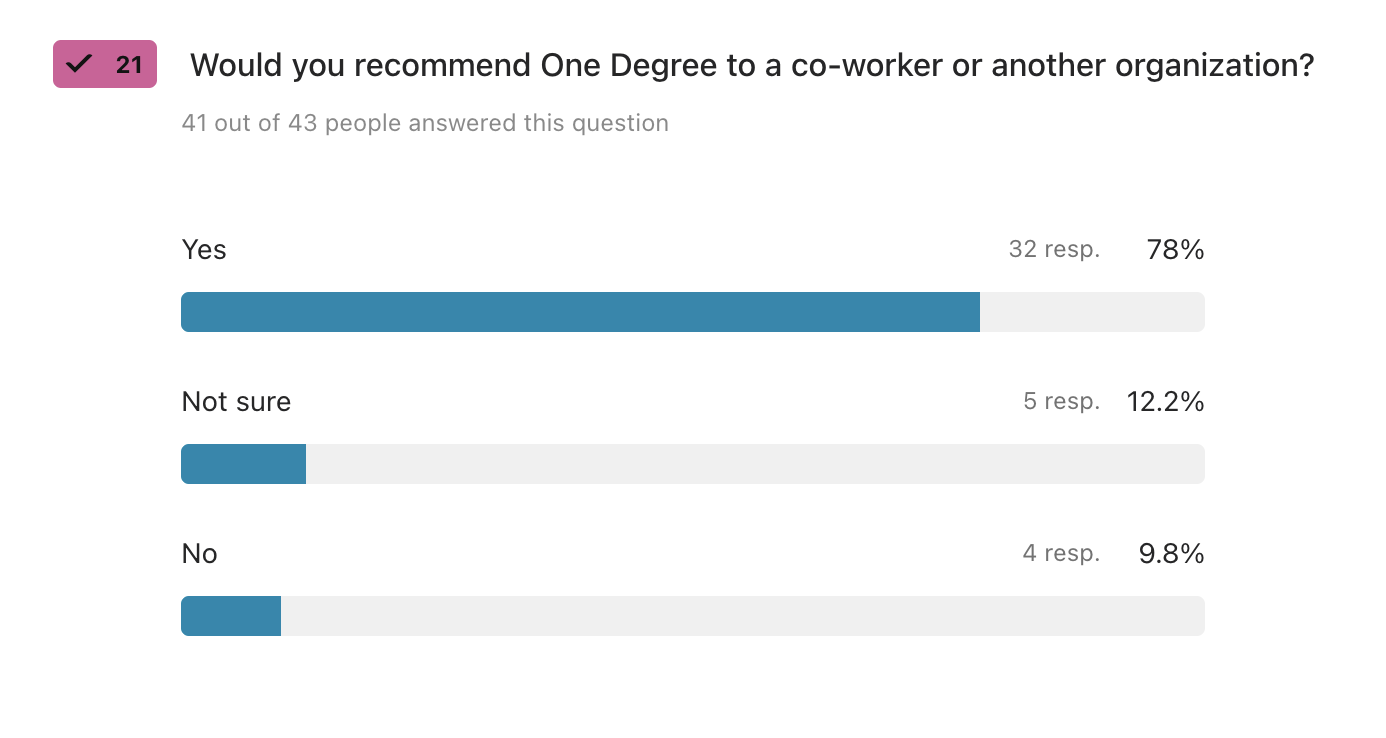
Most participants expressed satisfaction with the ease of use and vast resources offered by One Degree. 78% of respondents indicated they would recommend One Degree to a colleague.
However, building trust is an ongoing process. Survey participants emphasized feeling confident when referring clients to accurate, up-to-date, and available resources. In addition, some mentioned that systems that foster real human connections can best achieve this level of trust. Suggestions on this survey to foster human connections include:
Direct access to speak to real people at other organizations
Additional language support to include more communities in our regions
Greater awareness of community events and workshops to meet others on One Degree
“More resources with an actual open resource. Instead of being told to call back or to contact them in a few months.”
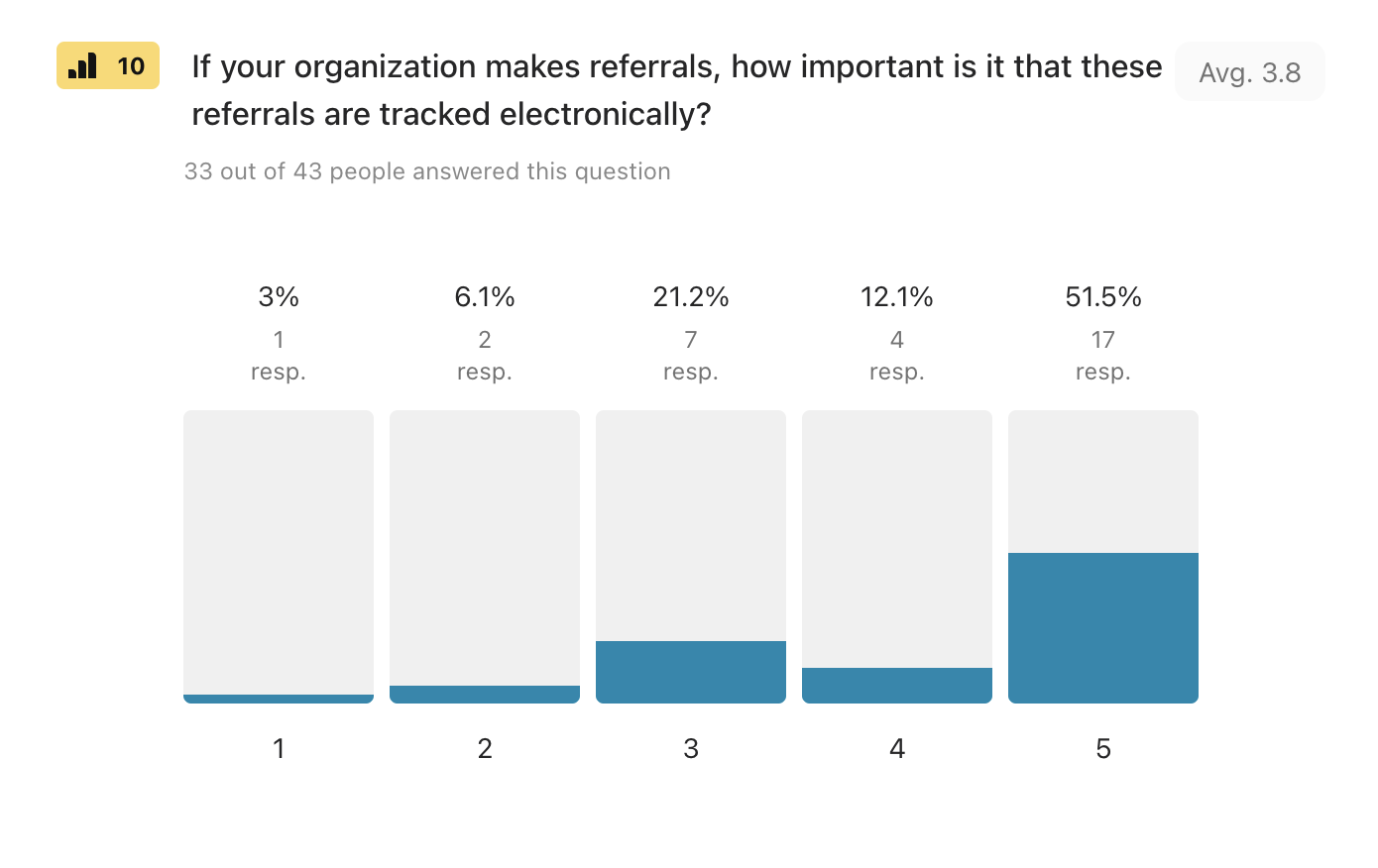
The survey also revealed the importance of digital tracking of referrals. Around 90% of respondents reported making referrals in their day-to-day work, with half indicating that digital tracking was valuable for follow-up purposes. Furthermore, integrations to systems such as electronic health records (EHRs) and 211 make referrals more effective and compatible with their work.
Taking Action
“I would need to know who and how resources are vetted. I only want to send the parents I support to organizations who are known to handle people with the utmost care.”
Our various feedback collection processes including this survey are actively shaping our roadmap. The feedback communicated a central theme of trust. Trust in service providers. Trust in resource information. Trust in entire ecosystems of care. As such, here are a few areas that we’re currently focusing on.
Networks of Trust: We’re exploring features to build trust through real connections and assurance of resource data accuracy. We have written previously about our extensive resource verification process in previous blogs.
However, we want to delve deeper into methods for information accuracy and timeliness for details such as resource availability and quality. Furthermore, we would like our platform to connect different service providers better together and engage in a human-to-human connection.
Language Expansion: We’re testing how to support more languages on our platform to ensure inclusivity.
Enhanced Resource Transparency: We’re improving data accuracy and clarity around resource availability, including capacity and wait times.
Staying Connected
Thank you to everyone who completed our survey. We do this work to support you and our community. It is necessary to build with you to earn our place as a trusted partner. We will contact our CBO partners in the coming months to further guide our platform’s direction. Together, we can work toward better outcomes for those in need.
If you’re interested in collaborating with us or learning more about One Degree: